

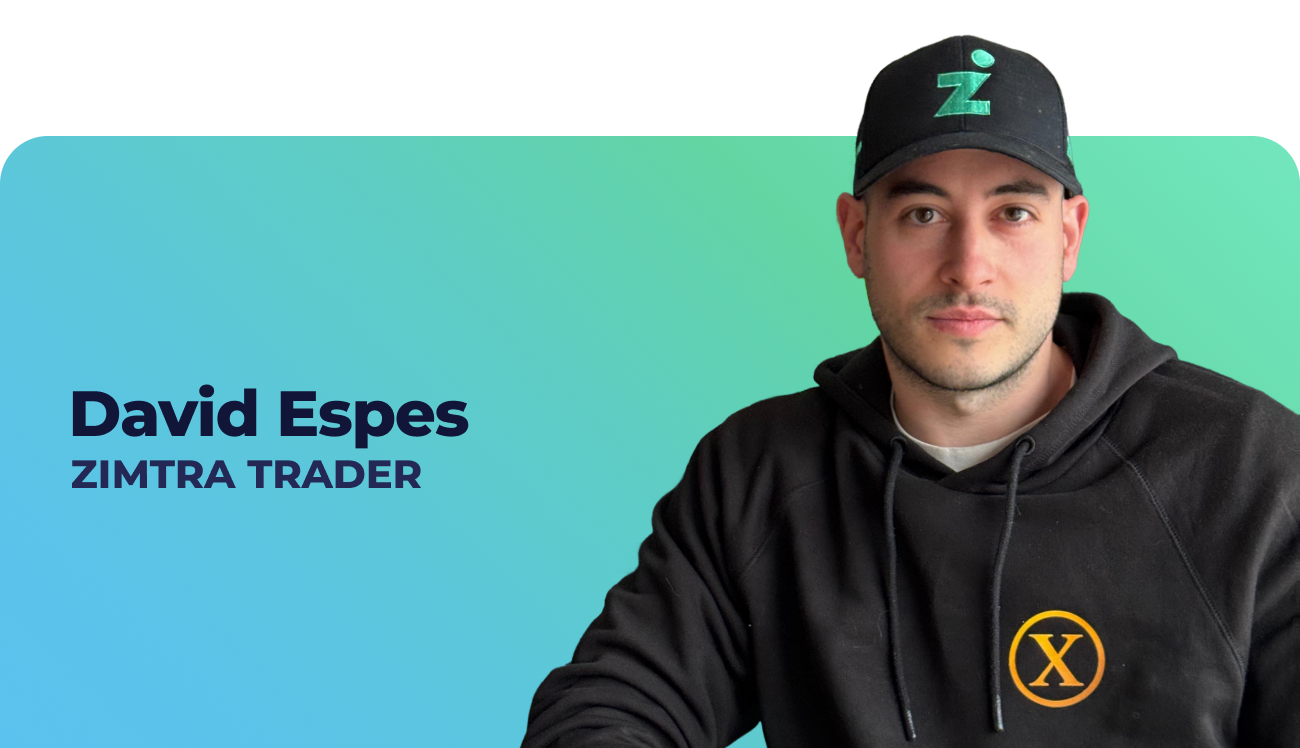
David Espes didn’t start his journey in trading behind a desk — he started it in the cargo hold of airplanes, loading luggage while chasing the idea that one day he could make it in the markets.
Nearly a decade later, that idea has turned into reality. Now based in Andorra, David is a full-time day trader who has carved out a niche in small caps, scaling to over 3000% returns in a single year and producing consistent five-figure months — all transparently tracked.
In this interview, he shares how that transition really happened, what changed in his approach, and why focusing on one niche made all the difference.
1. How did the transition really happen from working handling luggage at the airport to trading full-time?
I chose to work night shifts so I could align my schedule with the most volatile hours in the markets.
Once I found a certain statistical edge, the pandemic hit and we went into lockdown. We couldn’t even leave the house, so I used that time to focus all my energy on trading and fully complete the transition.
2. You achieved over 3000% returns in a year. What specific change in your approach or execution made that possible?
Several factors came together:
First, choosing the right market where this could fit best. Small caps are a very volatile market full of opportunities, and when combined with a hot market like 2025, this kind of return becomes possible.
Learning from those who had already achieved it. I leaned heavily on Xavi Comas and Yoel Pascual, two top traders in this niche who transferred the knowledge needed to make it possible.
Becoming obsessed with the process and putting in long screen hours to understand market context and stay in sync with it.
Applying compound interest without fear. As soon as I started seeing results, I didn’t hesitate to scale my position size exponentially. I was backed by the track record of peers and mentors who operated in a similar way, which reinforced my confidence.
3. What does your edge in small caps look like today? What are the non-negotiables you always look for?
I mainly trade low float stocks with a good level of extension and a minimum daily volume of 5M to avoid potential black swan events.
My biggest gains come from the short side.
4. You mentioned you’re on the edge of something bigger. What does that next level look like for you?
I think the next level is moving from being just a profitable trader to building a serious structure around my trading.
I’ve already proven I can generate consistent results, and now the focus is on scaling that: working with external capital, developing systems like the pre-funding program, and surrounding myself with people who can help take this to the next level.
5. For those who are still in the early stages of the process, what’s the first thing they should stop doing immediately?
Don’t get desperate, because that’s the biggest mistake at the beginning.
When you get desperate, you start forcing trades, constantly changing strategies, and chasing quick results—and that’s exactly what takes you further away from consistency.
Everyone has their own path, and in my case, it took years of mistakes to truly understand how this business works.
But when you go through that process properly, the long-term reward is more than worth it.
6. Why Zimtra? What specifically makes it the right environment for your trading?
Zimtra has several advantages that are key for me.
On one hand, it allows you to start with a more accessible budget and work with much more competitive locate costs compared to other brokers, which is crucial in small caps.
I also really value how easy it is to connect my account with DAS Trader, which is the platform I use daily.
And finally, their support team stands out: fast, efficient, and very attentive, which makes a big difference when you’re operating in such dynamic markets.
7. Now that you’re working with the Pre-Funding Program and external capital, how has your mindset around trading changed?
Working with external capital has strengthened my focus on risk management and capital preservation, which for me is the foundation of everything in this business.
The goal is no longer just to generate returns, but to do so in a consistent and controlled way.
That raises your level of discipline and forces you to operate with a much more professional mindset—as a capital manager, not just a trader.
At the end of the day, this isn’t just about trading, it’s about managing capital.
You can find David on X or Instagram: @majintrading